
It’s officially summer, and that means more people are hitting the road. Whether you’re celebrating a graduation, heading out on a family vacation, or just keeping up with the extra errands that somehow come with warmer weather, chances are you’re putting more miles on your car than usual. And with that comes a little more risk.
Getting stranded with car trouble is never fun, but it’s especially inconvenient in the summer when you’ve got places to be and people counting on you. So whether you’re gearing up for a long road trip or it’s just been a while since your last maintenance checkup, here are some things worth looking at before you go.
Good Tires Are Crucial for a Safe Trip
If there’s one thing to prioritize before any summer drive, it’s your tires. Worn or underinflated tires are one of the leading causes of blowouts and flats. A blowout doesn’t just leave you stranded on the side of the road, it can cause you to lose control of your vehicle completely, which is dangerous for you and everyone around you.
Tire tread is basically the grooves on the outside of your tire. Those grooves are what help your car grip the road, and even more so when it’s wet. When the tread wears down too far, your tires lose that grip and become a lot more likely to slip or blow out. A good rule of thumb is the penny test. Stick a penny into the tread with Lincoln’s head pointing down. If you can see the top of his head, your tread is too low and it’s time for new tires.
Tire pressure is another thing that gets overlooked. Hot weather causes the air inside your tires to expand, which can push your PSI above the recommended range and put extra stress on the tire. Driving on overinflated or underinflated tires affects your handling, your fuel efficiency, and how evenly your tires wear over time.
Before you head out, check for:
- Tread depth — Low tread means less grip, which is a problem on wet or hot pavement.
- Tire pressure — Check your PSI and adjust it to what your car manual recommends.
- Uneven wear — Usually a sign you’re overdue for a rotation or alignment.
- Visible damage — Cracks or bulges mean a tire needs to be replaced before your trip.
Your AC Can Make or Break a Summer Drive
Your AC is more than a comfort thing. Driving in a hot car for long stretches can cause fatigue, headaches, and slower reaction times, all of which are real safety concerns on a long drive.
Here’s something a lot of people don’t realize. If your AC is blowing semi-cool air around town, it can feel totally fine for short trips. But after hours on the highway with the system running constantly, it can stop working altogether. What felt like decent air at home turns into hot air with no relief in the middle of nowhere.
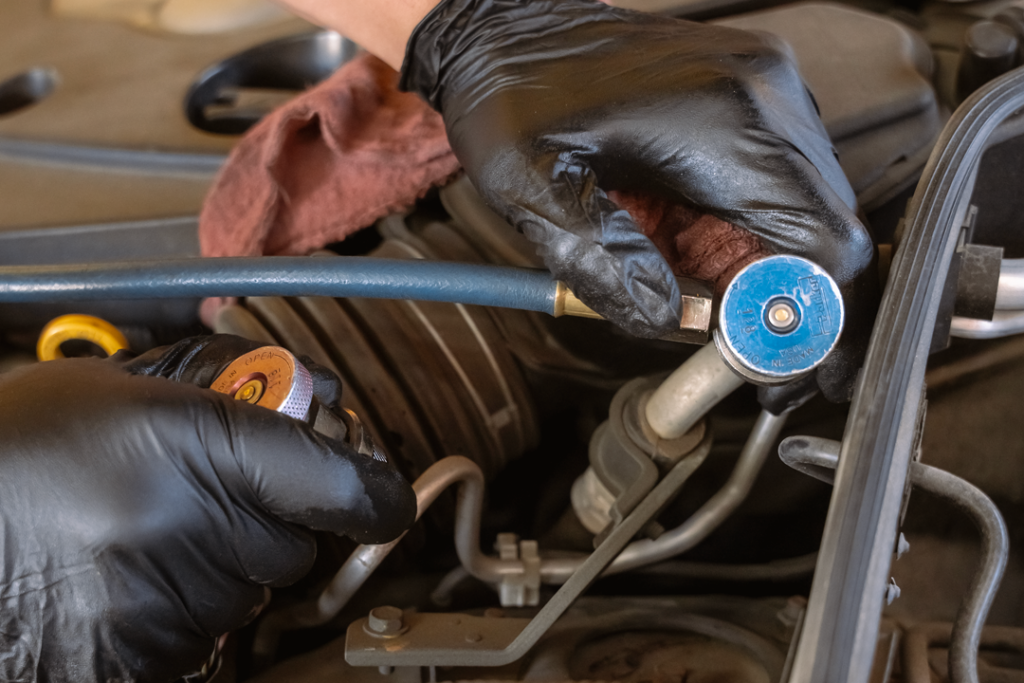
The most common reason AC stops blowing cold is low refrigerant. Refrigerant is the fluid that actually cools the air before it comes out of your vents. Over time it can leak or just run low, and when that happens your AC has to work harder to do less. Getting an AC recharge before a long trip is a quick fix that can make a big difference.
Your cabin air filter plays a role too. It filters the air that comes into your car through the vents, and when it gets clogged with dust and debris it restricts airflow and puts extra strain on your AC system. Most people never think to replace it, but it’s an easy and inexpensive fix.
Coolant is also worth mentioning here. While coolant is mainly about keeping your engine from overheating, an overheating engine can affect how well your AC performs. And keeping your coolant at the right level helps everything run the way it should on a hot day.
The Fluids Your Car Needs Before a Long Drive
Fluids are one of those things that are easy to forget about until something goes wrong. Your car relies on multiple different fluids to keep everything running properly, and long drives put more demand on all of them.
Oil is the most important one, since it lubricates your engine and keeps all the moving parts from grinding against each other. When your oil gets old or runs low, your engine has to work harder and the heat builds up faster. On a long road trip you’re putting a lot of miles on your car in a short amount of time, so if you’re already close to your next oil change interval it’s worth going ahead and getting it done before you leave. Driving hundreds of miles on low or old oil is one of the fastest ways to cause serious and expensive engine damage.
Beyond oil, there are a few other fluids worth checking before a long trip:
- Transmission fluid — This keeps your transmission shifting smoothly. Low or dirty transmission fluid can cause rough shifting or long term damage on high mileage drives.
- Brake fluid — Brake fluid is what transfers the pressure from your brake pedal to your actual brakes. Low brake fluid can reduce your stopping power, which is not something you want to find out about on the highway.
- Power steering fluid — Keeps your steering responsive and smooth, especially important when you’re maneuvering at higher speeds.
- Windshield washer fluid — It won’t leave you stranded, but visibility matters and you’ll be glad you have it when you need it.
Always Check Your Brakes and Battery
Checking Your Brake Pads & Brake Fluid
Most people don’t think about their brakes until something feels off, but by the time you notice a problem it’s usually been building for a while. Brakes wear down gradually over time, and long highway drives put a lot of demand on them, especially if you’re driving through hilly or stop and go areas along the way.
Brake pads are the part that actually presses against your rotors to slow your car down. When they get too thin, stopping takes longer and you’re putting more stress on the rest of the brake system. A common warning sign is a squealing or grinding noise when you brake. That noise is usually a built-in indicator telling you the pads are getting low. If you’ve been hearing that and putting it off, before a road trip is a good time to get it looked at.
And lastly, brake fluid transfers the force from your foot on the pedal to the brakes themselves. If the fluid is low or old it can affect how responsive your brakes feel, which is something you definitely want working correctly at highway speeds.
Your Battery Could Be Low or Dying
A lot of people don’t realize that summer heat is actually harder on car batteries than cold weather. Heat speeds up the chemical reaction inside the battery, which sounds like a good thing but it actually causes the battery to wear out faster over time. A battery that’s been through a few hot Texas summers may be a lot closer to the end of its life than you’d think.
The average car battery lasts about three to five years and if yours is in that range or older, it’s worth getting it tested before a long trip. Battery testing is usually quick and free at most auto shops. A dead battery is one of the most common reasons people get stranded, and unlike some car problems it tends to happen suddenly with little warning.
Signs your battery might be getting weak include your car being slow to start, your headlights looking dimmer than usual, or your check engine light coming on. If any of those sound familiar, don’t wait until you’re three hours from home to deal with it.
Safe Travels Start Before You Leave
None of this is meant to scare you or sell you on something you don’t need. Summer road trips and everyday driving put real demand on your car, and a little preparation before you head out can go a long way in keeping you and your passengers safe.
Car trouble has a way of happening at the worst possible time, and most common car problems are preventable with a basic pre-trip inspection before you hit the road. Whether you’re driving across the state or just putting more miles on your car than usual this summer, we want you to get there and get back safely.
If you’re not sure where to start or it’s just been a while since your last service, stop by and we’ll take a look. That’s what we’re here for!

